Time For a Change

I will have to admit I haven’t been here for a while. That’s all right; you haven’t been here for a while either. But I was moved to come here today to solve a problem. Like most things that bother me, it’s not a problem for most people.

This problem deals with the telephone.

First, a little background. Alexander Graham Bell got the first U.S. patent for a telephone in 1876. People give him a lot of credit for making the first phone. That was nice and everything, but it wasn’t as important as making the second phone.

It’s widely reported that the first phone call was to Bell’s assistant Mr. Watson in the next room. That’s not accurate. The first call was from someone telling Bell that the warranty on his buggy had expired.

I am not old enough to remember those phones, but I do remember that the phones in my little hometown in Minnesota did not have dials. You picked up the phone and the operator asked who you wanted to call. The number at our house was 199-J. The number at my dad’s office was 241. I remember those numbers, even though I was too young to use the phone. I am old enough to use the phone now, but I cannot tell you the phone number of a single person I know.

Sixty-five year old obsolete phone number, no problem. Number I call twice a week, not a clue.

We eventually got phones with dials, sometime after most of the rest of the nation already had them. For those of you unfamiliar, it had numbers on the surface and a plastic or metal round dial above it, with a hole over each number. Those antiques are now called rotary phones. We called them phones. To make a call, you put your index finger (usually) in the hole above the first digit of the number you wanted to call, and spun it around clockwise until it stopped, then you did the same for every other digit until you had finished all the numbers for whoever you were calling. That is why, to this day, people talk about dialing the phone. No one dials a phone any more, and hasn’t since some time in the 70’s, but no one has come up with a good term to explain how to call someone. Push button the phone? No. Tap the phone? That’s something else altogether. People still dial the phone, even though they don’t.

(We also still roll down the windows in a car. Explain that to your granddaughter some time.)

So anyway, in the 70’s, dials were replaced by push buttons. These were called touch tone phones. It’s pretty much like what you see on a phone now, especially if you have seen one on the desk at an office. They haven’t changed all that much. Cell phones have that same rectangular layout of numbers, though they are rarely used as phones.

The numbers are arranged 1, 2 and 3 on the top row, 4, 5, and 6 in the middle, then 7, 8, 9 and finally *, 0 and # on the bottom. Letters of the alphabet are paired with the numbers so  businesses can advertise that you should call 1-800-PLUMBER or 1-213-CARPETS and be annoyed as you try to spell-by-number.

I know what you’re thinking. What the hell is my point? What’s this problem I’m bitching about.

OK. Comes now the calculator. Actually, comes first the calculator. Adding machines came before calculators, and calculators came before touch tone phones. And because calculators are used by accountants, they saw some logic in putting the numbers sideways. 7, 8 and 9 on the top, 4, 5, and 6 still in the middle, and 1, 2, 3 on the bottom, with 0 below that. After all, doesn’t everyone look at a page of numbers and start with 7? Apparently, to get out of accountant school you have to learn to count 7 8, 9, 4, 5, 6, 1, 2, 3, 0. That explains a lot about government budget deficits. The number arrangement seemed logical to accountants. Need I say more?  

Now, somebody in the comments is bound to say that the reason the phone keypad is not laid out the same as the calculator is because accountants are so fast with a calculator, and that the phone couldn’t register the numbers that fast. The buttons on the phone put out a tone that sends a signal that connects the number. If you’re too fast, the tones don’t make the connection. And that’s a popular theory. It might even be true, if it were not the first time in recorded history that anybody cared what an accountant said.

You can just imagine the meeting:

“We have to reverse the keypad, because the accountants can’t get their calls to connect.”

“Who?”

Regardless, the phone keypad remains 1, 2, 3… and the calculator is 7, 8, 9…

This also explains why accountants never return your calls. They constantly dial wrong numbers. If your phone rings and the caller claims to be an accountant, hang up. It’s a scam.

For the rest of us who call people sometimes, and do some subtraction now and then, we have to double check what keypad we’re using. It’s a particular problem as you switch between the phone and the calculator on your mobile device (a euphemism for phone). Because there is no little notch on the 5, even accountants are not fast with those.  They should be the same. And they should be in the order they are in on a phone. That’s why it’s called numerical order. If we rise up and demand it, politely of course, maybe we can get that done.

And when that day comes, they can take the numbers off above the letters on the keyboard. Come on, that’s just stupid.

Home Moaning

As the temperatures here have dipped into the frigid upper fifties, the furnace has kicked in. But the heat hasn’t seemed to be reaching the family room, dining room and living room. The bedrooms and bathrooms are warm, but those are the rooms where the heat is least necessary. Those are rooms with down comforters and hot water. It’s the rooms we live in where the heat was lacking.  

The logical conclusion was that there was something wrong.  

All indications pointed to ducts, or what the professionals call the air duct system. It followed that someone had to go into the attic, and that someone was going to be me. 

The access to the attic is through the ceiling (no surprise there) of the coat closet in the hall. That means removing everything in the closet to be able to get the step ladder in. And since there’s nothing stored in the attic, and there is no basement, calling it a coat closet is something of a misnomer. Emptying the closet filled the living room. You know Parkinson’s Law; that work expands to fill the time allotted? The same is true of closets, with space instead of time. That is Prichett’s Law.  

Now, I have not been in the attic in several years. I mean several, like twelve or fifteen years. On what may have been the last occasion I was stringing new coax cable from the TV jacks around the house, back to where the cable comes into the house. In trying to feed the cable down the wall, I got a bit too close to where the roof meets the eave, and located a roofing nail with my scalp.  Coming back down the ladder with my blood-soaked t-shirt wrapped around my head, was not a pretty sight. Fortunately, not much damage was done to the cable, the roof, or my head. 

That was the most recent misadventure in the attic. There is, after all, nothing in the attic, except attic. At that time, it had the requisite Southern California paper-thin layer of insulation between the rafters. Since then, we had looked into increasing that layer to keep cool in the summer and warm in the winter, and were convinced to have insulation blown-in. I had not seen the results. 

Shining a light ahead of me, I poked my head into the attic and must have looked like Sid in Ice Age. A blizzard had happened. All it lacked was a chairlift to have been Lake Placid. This should have been my first clue.  

If memory serves, there is a sheet of plywood in the attic, which was apparently placed there either before there was a ceiling or before there was a roof. I couldn’t see it now, but reckoned it was somewhere in the vicinity of the 90-meter jump. As I made my way toward said plywood, creeping on hands and knees from rafter to rafter, moving a table lamp along with me, I tried to figure out where I was. It was easier when I could actually see and locate ceiling light fixtures and the like. Now, it all seemed much smaller than I remembered. (The opposite of many of my memories). And it was just snow wherever I looked. 

Not exactly snow of course. It wasn’t cold and it didn’t melt. Those were the assets. The drawbacks, in addition to covering everything about a foot and a half deep, was that I couldn’t breathe. I never thought I would say this, and I don’t mean it the way it sounds, but thank you coronavirus. With a supply of KN95 masks at the ready, I was able to crawl around the attic without contracting fiberglasstosis, or whatever it’s called, if that’s a thing.   

Anyway, about four feet farther than I thought it should be, I located the plywood and shortly after that, a glimpse of a duct. I followed the duct across the plywood and in due course found the problem. Somehow, though it had been untouched for 30-some years, the duct had become separated. The portion coming from the furnace was a good foot from the next section, which led to the family room vent. How this happens, I have no idea, but it meant that if there was any heat at all getting to the family room, it was purely a coincidence.  

The next step in the Bob Vila handbook after locating the problem, is to fix it. All I had to do was pull the two parts back together and secure them in place. This is, of course, the part where Bob steps back and says “Richard, how are you going to handle this?” and Richard mumbles some nonsense about humidity and air velocity before recommending hiring an expert. Well, I was already up here. How hard could it be?  

It seems the break in the line was beyond the end of the plywood and in a section where the rafters were no longer evenly spaced because, well, who knows why. But my reach challenged my balance and vice versa, meaning I was now in the ice arena part of the building and on two occasions, dangerously close to doing a triple Lutz through the ceiling. And while it appeared that they had come apart quite neatly, the two pieces of pipe didn’t want to go back together as easily. Or at all.  

I struggled with it until I exhausted my entire profanity vocabulary, got the two pieces somewhat assembled, and then adopted the “any change is an improvement” philosophy, before retreating back toward the ski lodge. We checked the vent and while the heat was not pouring out, it was recognizable as heat. And was better than it had been. Chalk one up.  

The living room and dining room will have to wait for the next foray. Or, we’ll use them only in the summer. Who uses their living room anyway? There’s no TV in there.  

Over the years, I have patched air mattresses and inflatable pool floats, secured the wiring of a broken radio antenna inside the trunk of a 1995 Honda, and wrapped the occasional Christmas present, but this is the first, and likely the last time I have used duct tape on an actual duct.  

Metric, Schmetric

People have been arguing since the French Revolution that the United States ought to adopt the metric system. It’s logical, they say. It’s all based on decimals, they say. Pshaw, I say. They just use decimals as an excuse. The meter, from which the system gets its name, is 1/10,000,000 of the distance of the meridian passing through Paris, from the North Pole to the equator.

And how, in 1790, did they know the distance of the meridian passing through Paris from the North Pole to the equator, you ask? I presume they stepped it off, and the number they got was in feet, which they divided by 10,000,000 to get 39.37 inches. Not satisfied to round it off to a yard, they had to call it a meter.

You see, the metric system really is based on the English system which is now pretty much the American system, give or take a stone.

Having settled on the meter, some ninny came up with a bunch of prefixes for things that were longer or shorter, and forced people to memorize them. Ten meters is a decameter, 10 decameters is a hectometer, 10 hectometers is a kilometer Then megameter for a million of the damned things, gigameter is a billion meters, and a trillion meters is a hell of a long ways.

Going the other direction, a tenth of a meter is 3.937 inches. Or, in French, a decimeter. 1/100th of a meter is centimeter, 1/1,000 a millimeter, a millionth of a meter is a micrometer, which is really a gauge for measuring stuff. Then a nanometer is a billionth of a meter and a picometer is just a speck.

So that took care of distance, at least from the North Pole to the equator. Except they eventually weren’t happy with that, because, well, the French. Now a meter is determined to be 1/299,792,458th of the distance light travels in a second. It seemed so logical, so why not. It’s still 39.37 inches, but the math is a whole hell of a lot more impressive.

But what about stuff? For that, there is the gram. It’s pretty small, so mostly there’s the kilogram. And those other prefixes too.

 Now hang on. Thankfully they didn’t mess with time; there’s still seconds, minutes, hours, days, weeks, months and years. None of it based on decimals, until you get to decades and centuries. But who wants a ten-day week anyway?

Apparently, while they were at the North Pole, they decided to mess with temperature, and invented Celsius. Now, if you know the Fahrenheit temperature, which you will because it’s on your thermometer and your phone and everywhere, and you want to know what that is in Celsius, (but, why?) you simply subtract 32 and multiply by 5/9.

 There’s more. Liter, radian, joule, coulomb, farad, lux, and becquerel–really. A becquerel is “one reciprocal second” (there is no explaining what a reciprocal second might be). Then a sievert, and a katal.

They took perfectly good words and co-opted them into some metric mumbo-jumbo. A mole, which is a snitch, is also a metric unit of amount of substance, exactly 6.02214076 x 10²³ particles.

Hertz is not a metric rental car, but, like becquerel, is a reciprocal second, because you might forget where you left your keys.

  • Newton
  • Pascal
  • Watt
  • Volt – one joule per coulomb.
  • Weber – not the grill, a weber is one volt second; see volt
  • Tesla – not related at all to hertz, it’s one weber per square meter, which is about how much room a Weber takes up.
  • Ohm
  • Siemens
  • Lumen, and
  • Gray – one joule per kilogram, a joule being one newton meter and a newton is one kilogram-meter per second squared. Hence the term “gray area.”

The English system, on the other hand, is much more straightforward. It starts with the foot. Everyone knows what a foot is. If you only have a foot and a half, that’s a cubit. A cubit is also the distance from the fingertips to the elbow. Cubit hasn’t really been heard of since the Old Testament. Maybe because they’re not sure whose arm to measure.

If you have three feet, you are not only peculiar, you have a yard. 

An ell, on the other hand, is the distance from that other hand outstretched to the opposite shoulder. It’s equal to twenty nails, (we’ll get there) or one and a fourth yards. (And all this time you thought an ell was an elevated subway. An elevated subway, however, is an oxymoron).

Fathom, the distance between arms outstretched, from fingertip to fingertip, or six feet.

A rod is 16 and a half feet, or five yards and a cubit. There are four rods in a chain and one hundred links in a chain.

A furlong is the distance a team of plow horses can furrow without taking a break, which of course we know to be 40 rods, because plow horses had a strong union.

A mile, with which you might be familiar, comes from walking 1,000 paces in someone else’s moccasins, and is 8 furlongs.

So, you see now how simple this is.

And if you have something that’s less than a foot – the English system has you covered there too.

A span is the width of the outstretched hand, from the tip of the thumb to the tip of the little finger. It’s 9 inches. (see inch below, but I’d really rather you didn’t skip ahead)

If you don’t stretch out your fingers, but stick out your thumb, you’ve got a shaftment, which is either 6 inches or a hitchhiker. Those of you measuring a shaftment as six inches in any other way are going to have to stay after class.

A hand is four inches, and a palm is three inches.

A nail is 3 digits or 1/16 of a yard.

An inch, for which you’ve been waiting patiently, is three barleycorns. That means, obviously, there are 36 barleycorns in a foot and 36 inches or 1,296 108 barleycorns in a yard.

A finger is 7/8 of an inch. If you give someone the finger, it’s only two and five-eighths barleycorns. Really not all that much.

A digit is ¾ inch.

A barleycorn is 1/3 of an inch. That’s not a lot of help since an inch is 3 barleycorns, but if you’ve got a ruler in the drawer, you know what an inch is anyway.

A line is ¼ of a barleycorn, and the shortest distance between two points.

A poppyseed is 1/5 of a barleycorn.

We could go on into things like perch (a square rod), rood (forty square rods) and acre which is one chain wide and one furlong in length, or about the size of a football field. If you happen to have an ox and a plow (or plough) you know that in a year that ox could plough a bovate, which is 15 acres or one-eighth of a carucate, which would require eight oxen. But where would you keep them?

Now, let’s get back to detail work.

A poppyseed is a 15th of an inch, which doesn’t show up on your ruler, and isn’t really very small at all, it turns out. So you need to know, for instance that a tad is larger than a dash and a dash is larger than a drop. There are 24 dashes in a tablespoon. None of that helps if you’re hanging a mirror and are told it needs to go just a tad to the right. In that case, a tad is pretty good size. It’s twice as big as a smidgen and three times the size of skosh. A tad, it turns out is the exact same size as a little bit.

Occasionally, we all need to deal in very precise measurement, for which you need to know that a jot and a tittle together are of course larger than a jot; a tittle being the dot over an i or a j. (See picometer, speck) That makes a tittle a hair’s breadth; often misspelled and mispronounced as hair’s breath, which not only makes no sense, but just pisses me off a tad.

And that is why the English system is so much better. Try being pissed off a deci-something.

Reunion

U.S. Department of Justice
950 Pennsylvania Avenue, NW
Washington, DC 20530-0001

August 1, 2019

Reunion Committee, Class of 1969
Pine City High School
Pine City, Minnesota 55063

Re: Lee Swanson

Dear Committee:

An inquiry has been forwarded to this office regarding a person who is believed by your committee to have been a classmate.

At this time, I am unable to confirm or deny any knowledge of the whereabouts of a Mr. or Ms. Lee Swanson, nor is there information as to the last known address of said person.

I further cannot confirm that there may or may not have been a significant criminal incident on July 30, 1975 in Detroit, Michigan to which your presumed classmate may or may not have been a material witness and may or may not have been relocated to San Diego, California under a new identity as a precautionary protective measure.

This office has conducted a thorough search of government records and offices on your behalf and has found no record – even in Google — which would indicate the existence of a Lee Swanson formerly of Pine City, Minnesota.

While we are unable to assist in your search, we wish you an enjoyable reunion.

Sincerely,

Whit Ness, Esq.

WN/ls

It Has Come to My Attention

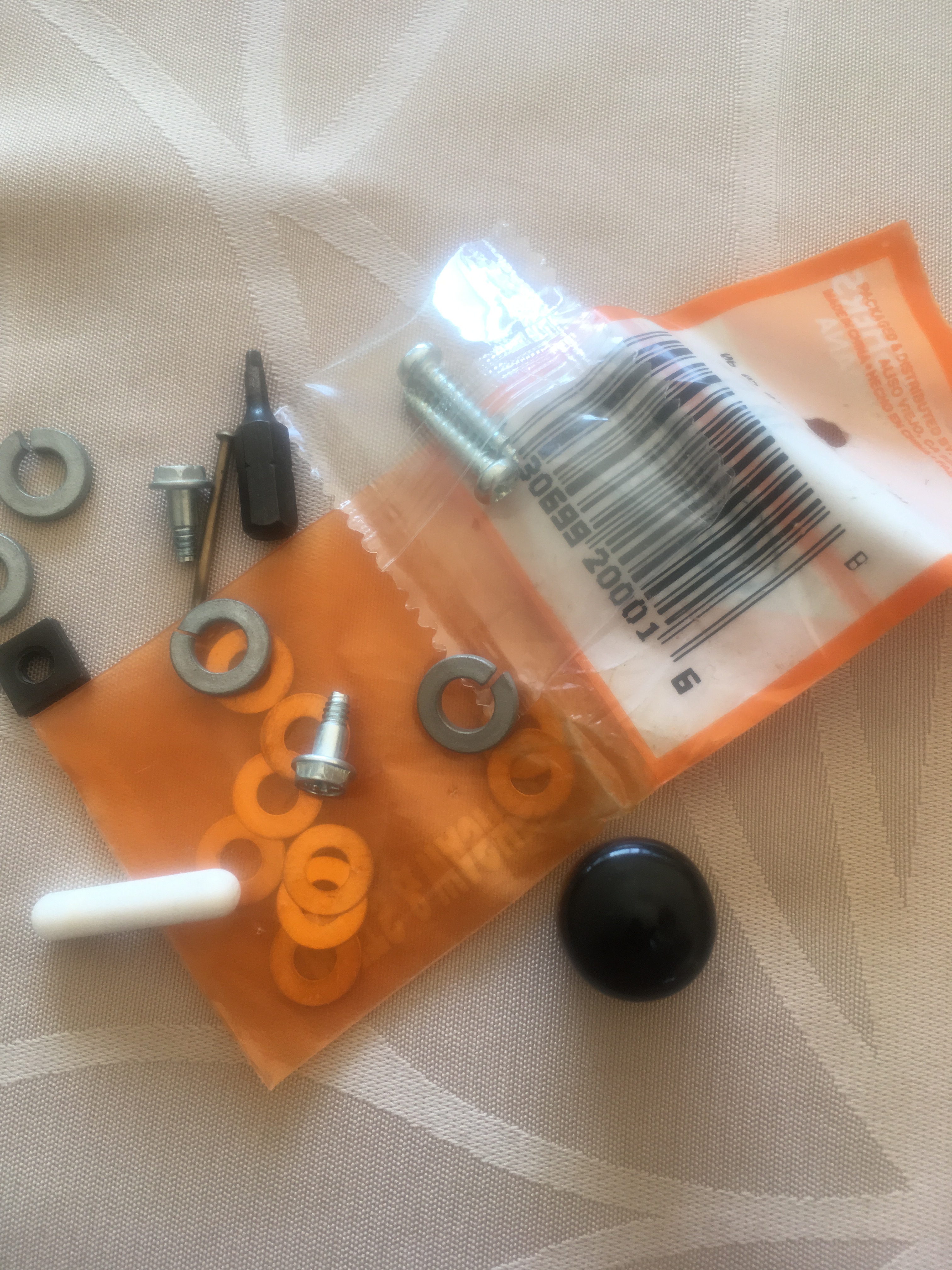
There are still a few places in this country where you can buy one gasket, three nails, or two washers. Those places are becoming fewer and farther between. Consequently, I have bags of washers and packages of screws from which I’ve taken one.

If you’re anything like we are, once in a while you look down at the floor and find a screw or a little odd-shaped something-or-else and have no idea where it came from, what it is or what to do with it.

Stuff

If I were well-adjusted, I would throw out those bags of screws and misplaced gaskets and what-nots. After all, the odds of finding where that thing came from are not good. And the odds of ever needing another one the same size as the two I had to have so badly I bought twenty, are even worse. As are the chances of finding where I put them should I need them. But I am anything but well-adjusted.

I save that stuff in a little box in the garage, and once in a while, when we go to someone’s house, I put a few in my pocket and drop a metal screw behind the refrigerator when no one is looking. Or maybe a washer under the bathroom sink. A piece left over from an Ikea cabinet might find its way behind someone’s sofa.

I won’t be there when they find it, weeks or months later while sweeping or vacuuming. But I know it will drive them nuts trying to figure out where it belongs. And that gives me a certain satisfaction.

-0-

Baseball season started recently; I’m told. (I’m not a fan). I do remember when it was called America’s Pastime. Now that claim goes to “Wheel of Fortune.” Baseball lost the title without a chance to as much as turn a letter, simply by putting a team in Montreal.

-0-

Speaking of seasons, we are hurling into another political season where people of all stages of sex, age, experience, philosophy and photogenicism will be the front runner for something or other at some time or another. Apropos of nothing, I learned when protesting the Vietnam War at the University of Minnesota that “radical student politics” is the only phrase in our language that contradicts itself three times.

-0-

I have a closet full of almost perfect clothes I have almost never worn. I think some of it should only be worn when it’s appropriate, so I save it for those eventualities. I don’t wear a pinstripe suit to work in the yard, for instance. (However, given the occasions I have to wear a pinstripe suit any more, I may as well).  

But I also have a too-large collection of sweaters, polo shirts, windbreakers and sweatshirts from various events and rarely, if ever, worn. I have sweatshirts from the 67th through 76th Oscars®, none I’ve worn more than six times. This year was the 91st Oscars® which tends to only point out how outdated my wardrobe is. Why am I hanging on to a 24-year-old sweatshirt in mint condition that may be worth upwards of $1.75 on eBay? It’s embarrassing to wear a sweatshirt in public that has an old, and large, logo. But, like the pinstripe suit, I can’t bring myself to wear it when pulling weeds, nor can I throw it away. If you know anyone who wants them, or sweaters from the 1982, 1991, 1992, 2002 and 2008 U.S. Open golf championships, send them my way. Marie Kondo will thank you.

-0-

(With apologies to Johnny Cash) I punched a kid in fifth grade just to watch him cry. He was new to our little school and there was just something about him that struck me the wrong way. So, I struck him the wrong way. It’s bothered me ever since and while I doubt I will ever see him again, I think he owes me an apology.

-0-

I have only recently realized that there are some people who don’t drink every day. I don’t know why they don’t. I’ve decided I might try that, though I don’t know what I will do instead

-0-

A few years ago, I was sitting, bored, at a staff meeting and mentioned that Hemingway is widely thought to have suggested that one should write drunk and edit sober. The officious director of the department, admonished that no one had better be writing drunk in her department. By jingo.

Once I realized she was serious, I allowed as how I felt it was really about pouring your thoughts and emotions out on to the page and writing without reservation, then letting it simmer and refining it later. And if that’s the case, it’s good advice.

Besides, it wasn’t Hemingway.


Hawaii

We don’t travel much. But this week, we’re coming to you from Maui. That’s a good thing. We flew here in Alaska Airlines. It’s a little odd, I’ll admit, to tell people “we’re taking Alaska to Hawaii.” Does Sarah Palin know about this? Does she even still live in Alaska? Can she see Hawaii from her house?

While you ponder that, I’ll move on. We upgraded our tickets from Economy to Economy Premium. Economy used to be called Coach, and Economy Premium used to be called “lucky enough to get a seat in an exit row.” They should go back to calling it Coach, because there’s nothing particularly economical about airfare. Now, on other airlines, upgrading may not be a wise use of your money. Their “premium” seats should be called “Economy and a Smidgen,” because while you get just enough extra legroom to take your knees out of your chest, you get nothing else for your investment.

Alaska tells you that, because you spent extra money to get a seat, you get to sit in it longer. Congratulations, you can wait in your row of seats in the plane, instead of in the row of seats in the terminal. We got to get in the plane right after the first class passengers. And the active duty military. And the children under two. And the adults traveling with children under two. And the people with walkers, crutches, wheelchairs, bone spurs and band aids. And the people with service animals. And the pilot’s brother-in-law. There were a lot of people ahead of us. But, we got there.

The other benefit Alaska affords you for spending what you can’t afford to get extra legroom, is free drinks. You feel really good about asking for a bloody mary that you don’t really want, but will order because it’s free, until you realize that you spent $109 for a place to put your feet and order a bloody mary. (You can get the same thing in a bar for about $100 less, usually with more leg room and a stalk of celery). You can’t possibly drink enough to make that worthwhile. You can’t. Me, on the other hand…

We landed on Maui, where the airport is in Kahului. The airport code for Kahului Maui is OGG, which just points out how difficult it must be to come up with three letter abbreviations for airports. It is way harder than the two letter postal abbreviations for states, which are hard enough.

Question: does one land in Maui, or on Maui. One clearly lands in Denver, because landing on Denver would be a disaster. Landing in Denver is no treat; the airport closes at the first sign of snow anywhere on Earth, and you could find yourself waiting at the gate for days or weeks. But again, in Maui or on Maui? I’m pretty adamant about “in” rather than “on” when it comes to boarding the plane. I definitely want to get in the plane, not on the plane. It gets really damned cold if you’re on the plane at 30,000 feet. Not to mention the difficulty with hanging on.

Anyway, we get out of the plane and we are in/on Maui. Every street, highway, road, and alley in Hawaii has a Hawaiian name. Seems fair enough, except that every one of them starts with the letters K and A, and after that are completely unpronounceable. Ka is apparently the Hawaiian word for street, highway, road, and alley. There are a lot of words here that mean more than one thing. Aloha means “hello,” “goodbye,” “love” and “please seat yourself.” It’s really one of only two words you need to know when you visit Hawaii. The other is mahalo, which means “do you want your receipt?”

There aren’t really towns here. There are just areas where people live, which the government calls “census-designated places.” They would be towns if they had mayors. Legend has it that a native Hawaiian set out walking with a bag of food, a t-shirt and a bobble-head doll. When he couldn’t walk any farther, he stopped and built a hut. The next day, a businessman bought the hut, the food, t-shirt, and bobble-head, and opened an ABC Store. The Hawaiian man gathered more food, a bottle of wine, coconut oil lotion and walked on. That night he built another hut and another ABC Store sprang up. This continued until there were gatherings of stores, and people, all over the island.

We’ve gone to Hawaii several times, but it’s been many years since we’ve been in/on Maui. If you haven’t been, you’ll be relieved to know they drive on the right, though slowly. And almost everyone speaks perfect English. If you’re now hoping I’ll say something that hasn’t been said four trillion times before about getting lei’d in Hawaii, you will be disappointed. There is no joke about a lei that hasn’t been said at least four trillion times.

We came because we were offered the opportunity, and, why not? Once we looked at available dates the trip just happened to coincide with my umpteenth birthday. Though I am in my early umpteens, I recognize that the best thing about the umpteens is that you never get any older than that, though eventually they won’t let you drive.

So as for Maui. We are not seeking out a luau, because, we’ve had bad food at high prices before and, honestly, it’s not that satisfying. It was better to walk along the beach to a bake shop and get malasadas. Malasada is the Portuguese word for beignet, which is the French word for fritter, which is defined in most dictionaries as a waste of time. But tasty.

We did take the road to Hana. It is along the coast and was formed by following the wild chickens. To hear others talk about it, I was under the impression there was some reason to go to Hana. There is not. Gertrude Stein could have been talking about Hana instead of Oakland. It gives meaning to the expression “getting there is half the fun.”

And we spent a fair amount of time doing nothing of any significance at all. And that suited us. So please don’t ask if we did this or tried that and, if we didn’t, we really missed out on the opportunity of a lifetime. I think we’ll bear up under the disappointment just fine.

Son of Europe on the Fly

As we embark upon our first ever trip to Europe we find ourselves deposited in London at the conclusion of our Fast and Furious tour of Amsterdam, Cologne, Lucerne, Paris and all parts in between. I’m working on icing the sprain in my neck from looking left and right to see the sights of the continent as it whisked by.

After a week of apparently unheard of good weather, June arrived in England. Cold and windy as we set out to see the city.

We started on foot, since the coach (don’t call it a bus) was off to exhaust other unsuspecting tourists across the countryside. Walking is a pace more suited for sightseers to see sights, like the café that offered “Spiffy Indian Punch.” Just in case, we bought Oyster Cards which, you may know, allowed us to ride the buses and the Underground, but did not provide any mollusks on the half shell.

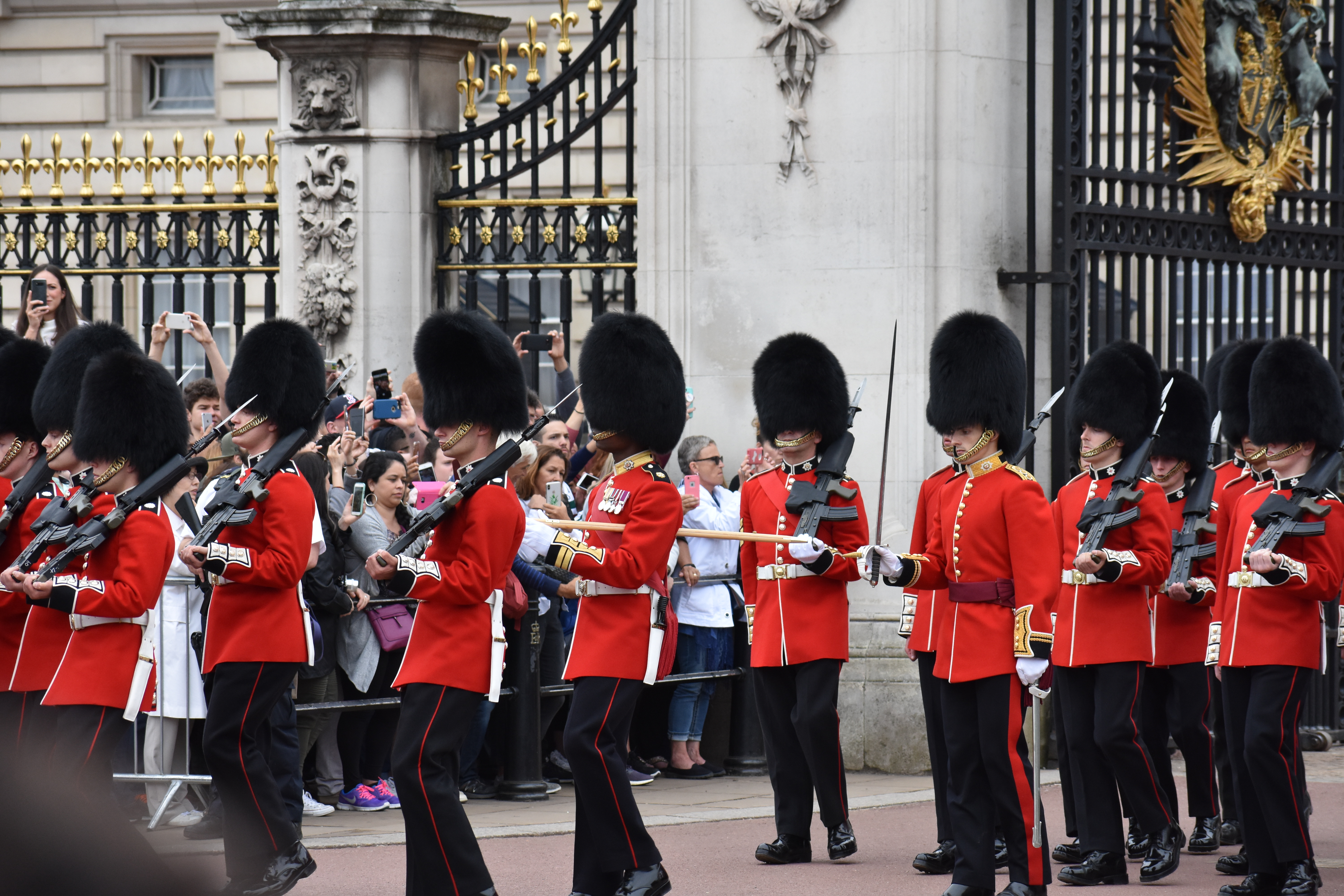
So we managed to do the full Roger Miller, give or take your mama’s old pajamas. Westminster Abbey, which like everything else in Europe might have been in some state of scaffolded disrepair, had it not been spiffed up for The Wedding the previous week, which was now just key chain souvenirs. We saw the Tower of London, where the White Tower was wrapped in scaffolding, and the scaffolds thatDSC_0211 used to be Big Ben before going by the scaffolded House of Parliament.  We managed to arrive at Buckingham Palace in time for them to change the guards, and saw bobbies on horseback, two-by-two. Does that count?

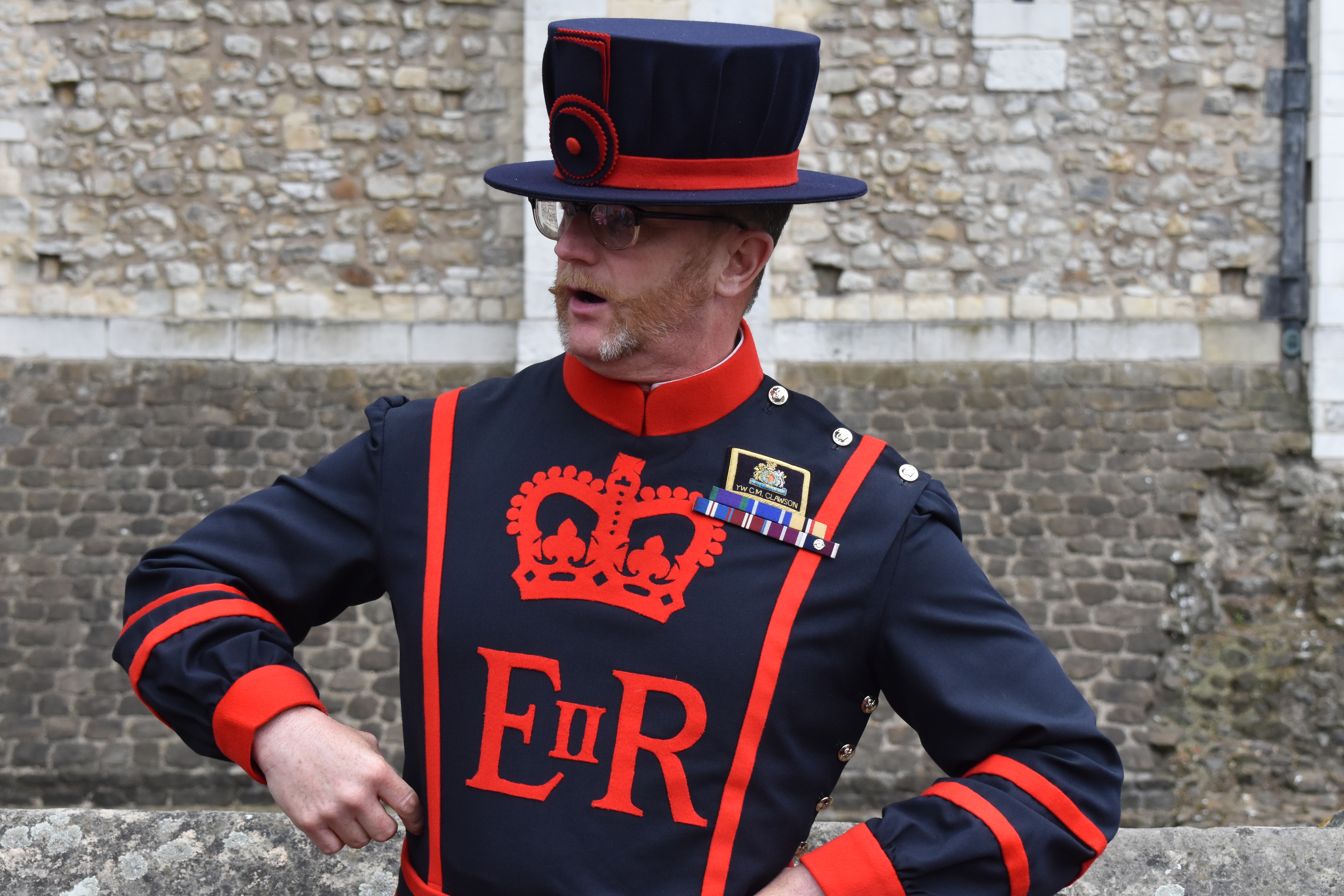
At the Tower, we joined the Beefeater tour, because at this point it had been two days since we had been with a group and we were going through withdrawals. DSC_0232The Beefeater who ushered us around served no gin so once again I failed to get a martini, but he largely made fun of the history of the place. They are actually known as the Yeomen of the Guard, whatever that means. About 140 people, including Yeomen and Yeofamilies, live in the place where Anne Boleyn, and any number of others, were beheaded. “Mind your manners children.”

We also saw the ceremonial changing of The Word. Before there were hackers, the Tower types needed a secret word to let them know if they should do whatever it was they were supposed to do. These days, the odds of being attacked by Huns are fairly slight, but they go through the motions anyway. Every day they choose a new “word.” What else do they have to do? We watched the soldiers march around in circles and go off to tell someone The Word. Presumably they whispered. A security guard at the building housing the Queen’s Jewels (or some facsimile thereof) was standing nearby and we asked her what was going on, because The Word is so super-secret, it isn’t in the guide book.

Me:   Do you know The Word?

She:  Yes.

Me:   What is it? I won’t tell.

She:  I can’t tell you

Me:   Please.

She:  No

Me:   I said please.

She:  Sorry

Me:   What was yesterday’s word?

She:  I can’t tell you

Me:   They’re not going to use it again.

She:  I can’t tell you

Me:   Your secret is safe with me

She:  No

Me:   Which one of those guards knows what The Word is?

She:  I can’t tell you that either.

Me:   You’re no help, you know that don’t you?

She:  Yes

We made the mistake of buying fish and chips at the Tower because it claimed to be the original fish and chips. It was. 147 years old. Once you get past all the fried coating, the fish is about the size of your middle finger. The chips, on the other hand, are also the size of your middle finger, which is good. So, show them your middle finger and just order the chips.

There are several gift shops at the Tower of London, because, everyone has to pay for the wedding somehow. They sell something called “London Lip Balm” which I suspect is used in maintaining the famous stiff upper lip, but it looks like Chap-Stick.

We decided to take the Underground back to the hotel. We not only did not know The Word, we didn’t know how to get to our hotel. We learned that lots of uniformed folks will direct you congenially while wondering how you were able to get to adulthood without being able to read an illegible map.

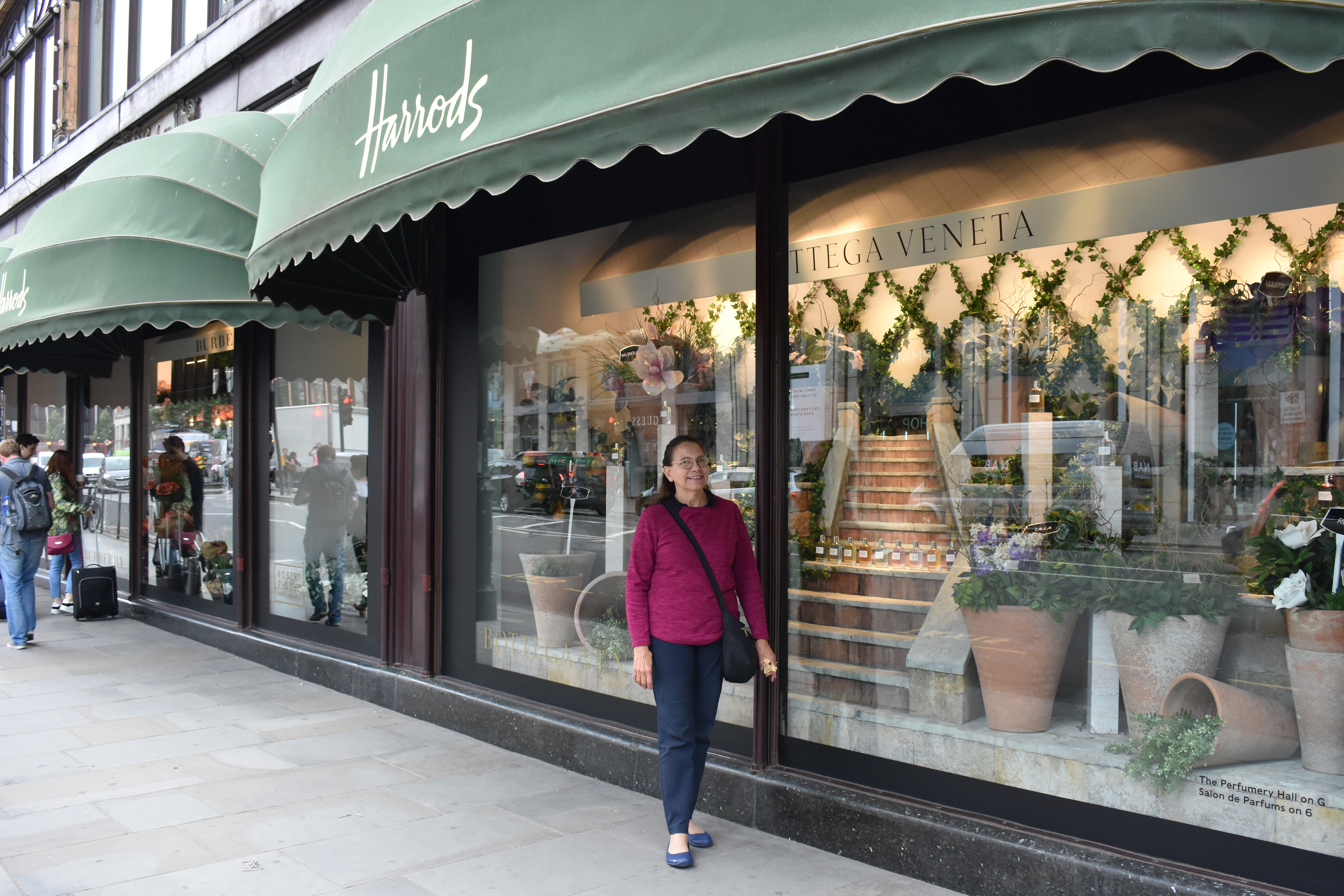
The next day our mission was to shop. We wanted to DSC_0201satisfy the grandchildren and a few somewhat deserving adults. Naturally, to look for souvenir t-shirts, we went to Harrods. Now, it’s taken me almost 26 years, but, I know my wife. The day was over. Pull up a chair, and let her touch everything in the entire store. Much of it is guarded by security folks, but she will touch it anyway. Somehow.

There, amongst the crystal and sterling and a two dollar Mont Blanc ballpoint pen that sold for £25,900 was a collection of coffee mugs. I love coffee mugs. When I was working and traveled to an event, I always bought a souvenir coffee mug. We have more than a few. A few cupboards full. It’s a bit of a point of contention. Let’s say I was not encouraged to add to my collection on this trip. And these were not exactly representative of our experience. They all had sayings and were aimed at the Harrod’s shoppers.

“I meant to behave, but there were too many other options.”

“Apparently the lifestyle I ordered was on back order.”

And, the only one Cheryl thought was appropriate for me; “Does not play well with stupid people.” I’ll take it as a compliment no matter how it was intended.

Unbelievably, we found no souvenir t-shirts at Harrod’s and moved on to a place called Primark. It was what Walmart would be in a third world country. On second thought, Walmart is probably already in third world countries. Like Texas. Suffice to say, it was a bit downscale from Harrod’s. On our walk there we saw any number of stores and brands advertised which were completely unknown to me. Fenty by Rhianna may be on your radar, but not mine. There was also Goopink, Boorman, Marc O’Polo and Wet Paint. Turns out that last one wasn’t a brand name.

In time we found a variety of requisite t-shirts and caps, skirts and pajamas and were on our way.

The following day we were off to Budapest. A short plane ride or two and the start of the next adventure.

Foolish boy.

First of all, Heathrow airport has the best toilets in all of what I’ve seen of Europe and America. They are clean and offer hand lotion, sanitizing lotion and condoms in both the “male” and “female” toilets. (So named so as not to exclude boys and girls I assume). And, before you ask I did not personally research the female toilets. I had an accomplice.

That’s the good news.

We got to our gate with time to spare, only to be told the flight was delayed 35 minutes. You must know that an airplane crew can’t do anything in 35 minutes. And a Lufthansa airplane crew doesn’t even show up in the first 35 minutes. Since we had time, we looked through the shops. Nice shops there. There was a Kate Spade store. I was surprised it was open, since she had committed suicide just the day before. I went in and asked if they were selling commemorative scarves. Too soon? (They were not). An hour later, we were getting in the plane to fly to Munich, or Munchen as the Germans misspell it.

Why Munich you ask? I looked at the map and from London to Budapest is about fifteen inches. Stopping in Munich adds an inch, or nine hours.

Our connecting flight was now much in doubt. We needed to get our passports checked again and get from one concourse to another. We arrived breathlessly as the gate closed. The ever-so non-communicative Lufthansa gate person stared at her computer and typed, and typed, and typed. I haven’t written as much in this blog as she typed into her computer while we stood there.

Finally she said we had been booked on a later flight. Four and a half hours later. As we waited, they changed the gate, then the departure time, then canceled it altogether. It was raining lightly in Munich and the plane could not take off. Really? No lightning, just rain. Where’s Sully when you need him?

Back in line to see what fun they had in store for us now. Another flight was leaving in another four hours and we could get on that. In the meantime, in consideration for the inconvenience, they begrudgingly gave us vouchers for €10, for which we were supposed to be grateful. That’s about $11.75. Ever try to buy a sandwich, or a drink, or a cup of coffee, at an airport with $11.75? We were about ninety dollars short.

The flight that was going to leave at 10:35 finally left at 11:10. No one at Lufthansa made an announcement, offered an explanation or spoke at all. Had we not seen a little light at the gate turn from red to green, we’d still be standing there. Through this all, there was exactly one person at Lufthansa who was pleasant.

I won’t mention that the planes were WWII Luftwaffe rejects. Dirty, old, broken down. But I won’t mention that.

Should anyone ever ask, you can tell them that Lufthansa translates to “Left standing at the airport.”

We eventually arrived in Budapest, which is not the loveliest airport in the world, but by this time we didn’t care if there was an airport at all. We found our luggage and a little man holding a sign that said “Viking.” We loved him. We lavished him with praise. We showered him with Swiss francs.

He got us to the ship where our next adventure would begin. We thought.

We wheeled our luggage to the doorway or whatever they call a doorway on the ship and a uniformed guard made entirely of East European muscle pointed to the room card entry box. I told him we were just arriving and didn’t have a room card. He seemed to understand, though the only word he uttered, over and over, was “sorry.” But, he rang a doorbell. We stood forever, while he rang the bell over and over.

It’s one o’clock in the morning. The guy who was supposed to be on duty had to get out of bed and put on his shirt and tie before he came to the doorway or whatever they call a doorway on a ship and welcomed us. We got our room cards. We got our room. Cabin. Stateroom. Whatever. He came back in a few minutes with sandwiches and fruit. We had arrived.

And that brings us to Part III.

Europe on the Fly

Back in the Paleozoic Era, Charles Kuralt was the “on the road” reporter for the CBS Evening News. This was decades before he anchored CBS Sunday Morning, and eons before they discovered he had a second family “on the road” in Montana, but that’s another blog.

For a few moments of that time, I was a very witless and unwitting reporter at the CBS affiliate in Sioux Falls, South Dakota.

Kuralt traveled the country looking for interesting little stories in out-of- the-way places, which accounts for why he came through South Dakota more often than not. Any time a Rotary Club got wind that he might be in the area, he was invited to a luncheon. It happened so often that he produced a film about what he did and how he did it, so he wouldn’t have to give the same talk over and over.

The film began with the camera on a distant hillside showing a tiny speck of a motor home, gradually getting larger as it wound its way through the countryside. In due course, Kuralt’s baritone voice explained: “This is how we travel. We go slowly, so as not to miss anything insignificant.”

When we decided to take our first trip to Europe, I had that film in mind and took note of the quirky, unusual and insignificant. If you are looking to me for advice on what to see and where to go, you’re in the wrong blog. Try any of those hundreds of people who travel for free and write books and articles about what they can do and see with unlimited time and money.

We didn’t have that kind of time, or money. Since it was our first time east of West Quoddy Head, we took tours. The first by motor coach (don’t call it a bus) and the next on a ship cruising the Danube.

If you’ve been to Europe, you may have discovered these same things. Or you may not.

It starts in London. Actually, it starts at home. Then Los Angeles and then to London. It took up a good part of that day and half of the next, given the time change. Upon finally approaching Heathrow airport the pilot announced “we will be landing in 30 minutes, local time.” And this the man we had trusted to fly us across the Atlantic.

The line to check our passports was three hours long. The driver who was supposed to meet us left long before that. The next car was more than an hour away, and then was stuck in traffic. Twelve hours from San Diego to London, six hours from the airport to the hotel.

We settled in and went to an Indian restaurant, because, well, English food. American cuisine is an oxymoron, but English food is inedible.

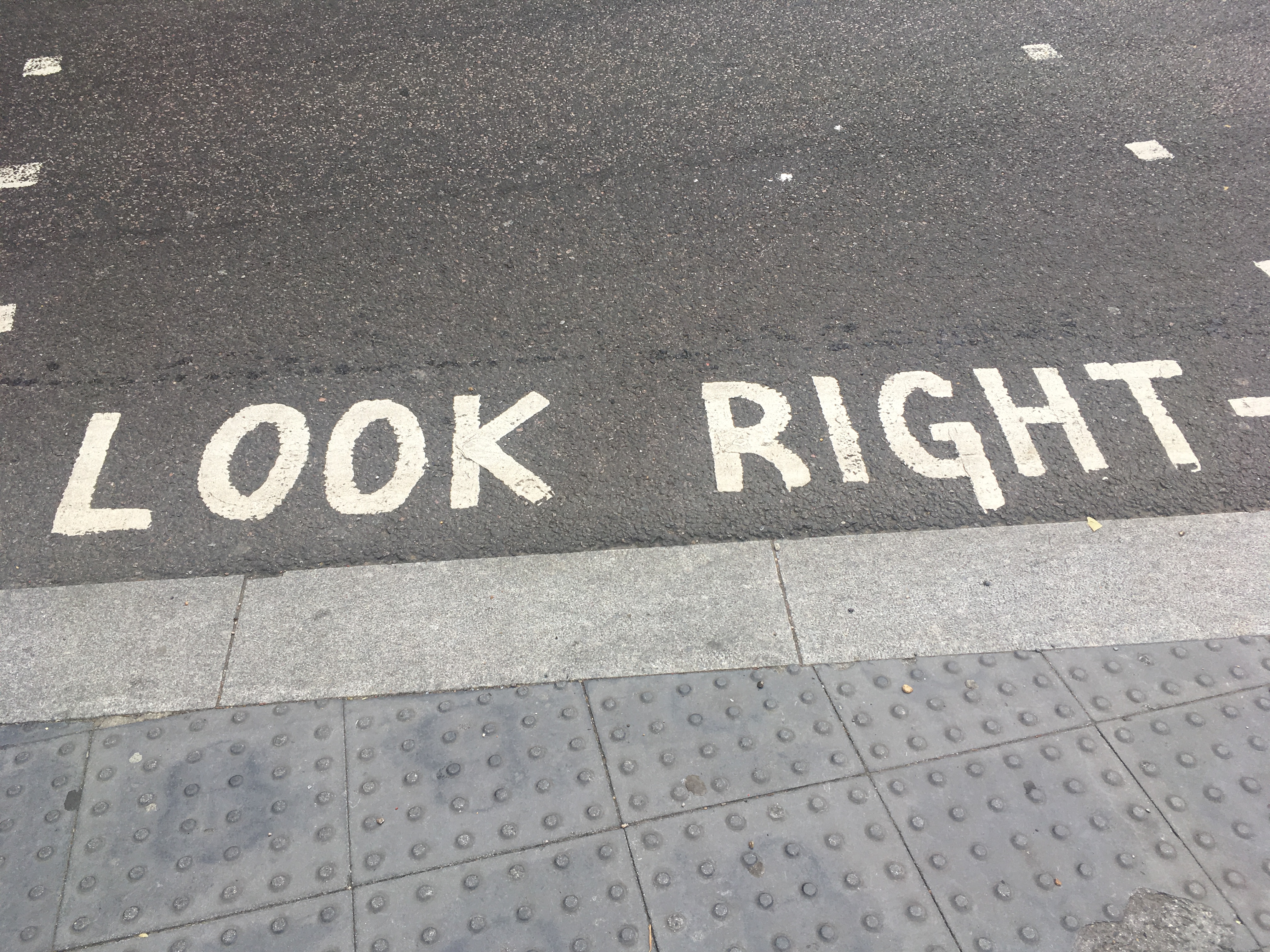
With a day before our tour started, we set out walking. Everywhere we turned, people apologized for the horribly unseasonable weather. It was 74 (23 C), and completely unlivable in an economy reliant on cashmere. People in the UK, as you no doubt know, drive on the left, or wrong, side of the road. People iIMG_0961n the rest of Europe, except Malta and Northern Cyprus, drive on the right, or right, side of the road. Since that means tourists and pedestrians from civilized nations are liable to be unjustifiably mowed down right and left, there are helpful painted warnings on the street at many intersections.
We stopped at a pub for lunch. I ordered a toastie. A grilled cheese panini covered in butter. It is food in the way a county fair concession stand is a restaurant.

A word about pubs. Do not enter one when Liverpool is playing something called football in something called the Champions League Finals. Hard to find a seat. Hard to hear. Hard to understand why so many people are so interested in something so uneventful.

Forget what you’ve come to believe, no one in England knows how to make a martini. I ordered one and got a glass of dry vermouth on ice.

Ewww.

Having learned, (or learnt, as the Brits would write) I asked for a glass of gin. Never mind the olives and the proper cocktail glass. He poured a gin and tonic. Later in the trip, at a nice restaurant where we stopped for lunch, I gave it one more try.

Me:   “Do you make martini cocktails?” Taking no chances to be confused with Martini and Rossi.

She:  “No I’m sorry, we don’t.”

Me:   “Really.”

She:  “Yes, I’m sorry.”

Me:   “This is England, right? Winston Churchill? James Bond? Shaken not stirred, all that?”

She:  “I’ve heard of that but I don’t know.”

Any true martini drinker knows that stirred is the correct answer, but it is not one that has been practiced in any bar anywhere since Sean Connery uttered the improper directive in 1956. Shaking shatters the ice and dilutes the gin. Stirring gently produces a much better cocktail. Cooling the glass and pouring gin directly into it, better yet. (No matter the recipe, it is only necessary that vermouth be in the same room).  

When you order a drink in Europe, by the way, the bartender always asks “single or double?” To them, a single is 25 milliliters, or about enough to coat the bottom of a shot glass. It is carefully measured into a metal thimble and poured from there. Just so you know.

But, about the tour. It’s called A Glimpse of Europe. I called it Blink and You Miss It.  

We knew from the start that we were covering a lot of ground in a short time, and it lived up to its billing. Indeed, the first thing the tour director told us, after apologizing for the heat, was that this was the fastest tour the company had.

The next thing he told us was that he was half French and half American and lived in Germany. I don’t know anyone in America who describes their nationality as American. For an American French guy, he had a distinctive Scottish lilt. He introduced our driver as Yani from Slovenia. Or maybe Laurel. We were never sure.

The Glimpse began at 3:15 the first morning so we could have our bags packed and outside the hotel door by 4:15 and leave by 4:45 to catch a ferry across the channel. This was clearly a harbinger of things to come. On the English side, as you may have heard, it’s the English Channel. To the French, it’s la Manche, or the Sleeve. Clearly the English had first choice on naming rights. 
DSC_0099

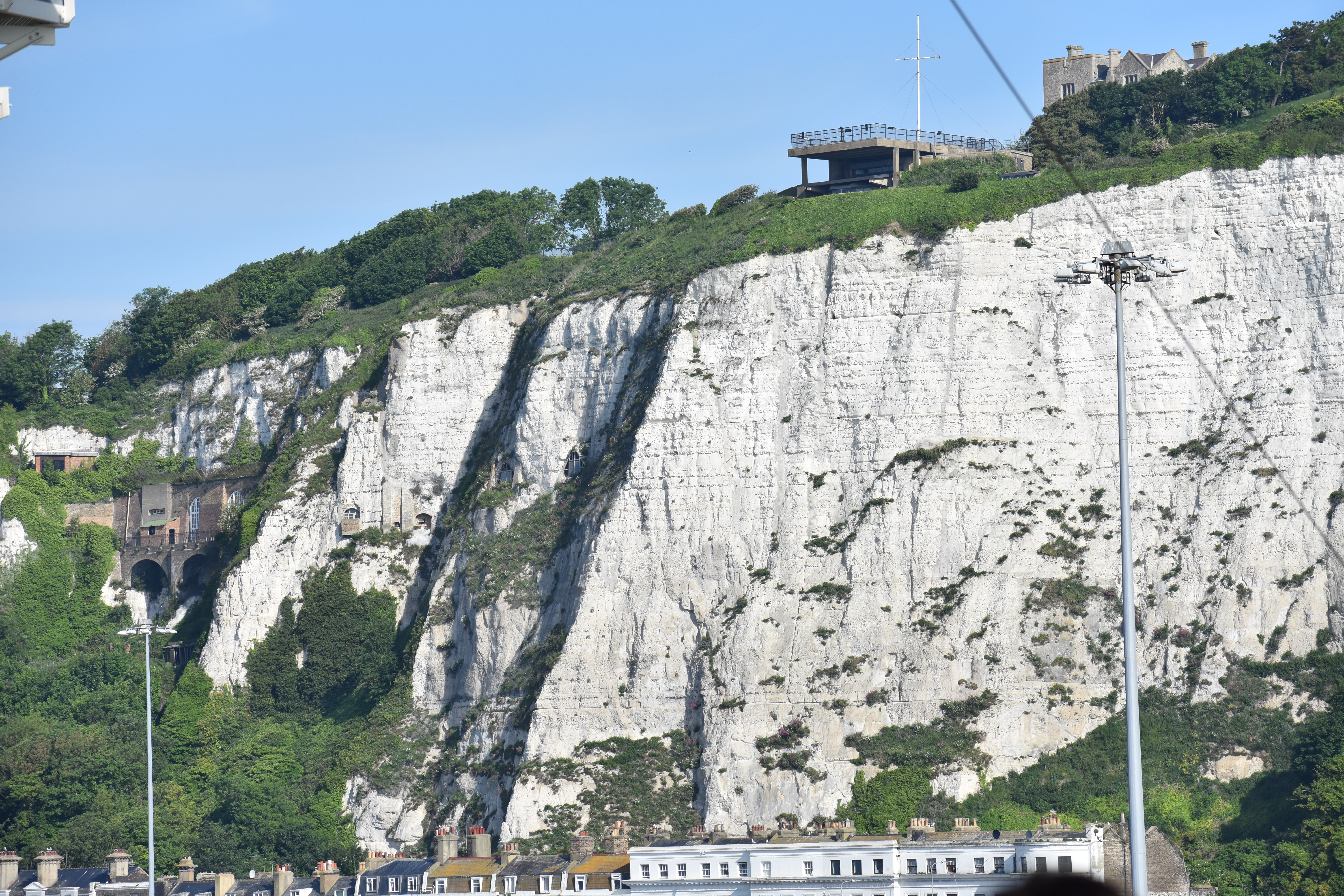
48 people, most strangers to one another, in a coach (don’t call it a bus) on the way to Dover where the cliffs are indeed white, and then on a ferry to Calais, France. We stayed only long enough to have our passports stamped and then drove across northern France, through Belgium, into the Netherlands, stopping just barely occasionally enough to use the facilities, which are known as toilets, or WCs, not restrooms or bathrooms. We always seemed to make these stops at the same time as every other coach (don’t call it a bus) in Europe also stopped at the same place. The women’s line was halfway to Spain, every time.

There are, to my knowledge, exactly three free toilets in all of Europe and they are all at McDonald’s. Elsewhere you will pay something between a half a euro and a euro and ten cents to go to the bathroom. There are times you weigh whether it is worth it.

There were pay toilets in the U.S. up until the 1970’s. Little lock boxes on stalls accepted a dime or a quarter to allow you to enter. They largely disappeared after a couple of high school kids launched a campaign declaring that number one and number two were basic human rights. They got legislators to listen and before you knew it, one state after another outlawed pay toilets.

Apparently, the pay toilet lobby wasn’t as strong as the NRA.  

I recall a Burma Shave style poem that drove home the unfairness of paying to poop. Burma Shave was a Minnesota based shaving cream company that posted hundreds of advertising signs around the country in the 40’s, 50’s and 60’s. Six small signs in sequence that added up to rhyming jingles, posted on almost every two-lane highway. My brother and I loved to read them from the back seat, waiting for the punch line as we traveled along. They were things like

Why is it | When you | Try to pass | The guy in front | Goes twice as fast? |

Burma Shave 

Car in ditch | Man in tree | The Moon was full | And so | Was he | Burma Shave 

The not Burma Shave jingle on pay toilets was

Here I sit | Brokenhearted | Paid to shit | And only farted

That pretty much sums up that discussion.

There were other signs we saw as we traveled by coach (don’t call it a bus) that you wouldn’t see in the U.S. They were generally more easily understood and/or more polite. Yield signs, for instance, look the same, but say “Give Way.” And then there was, “Necessary construction upcoming. Apologies in advance.” Signs pointing to exits in the London Underground say “Way Out.”

Northern France cannot be distinguished from California’s Central Valley. Flat farmland. Belgium is the home of a particular form of waffle, the only sprout named for a capital city and the home of the French fry. Yeah, I know.

They would be called Belgian Fries to this day, perhaps, had they not been served to American soldiers in World War I who didn’t know where they were and called them French fries. Our side, it might be noted, won the war anyway, somehow.

The naming confusion—which could have been avoided altogether had we just followed the British example and called them chips, but, well, English food—did not deter Representative Bob Ney of Ohio from ordering Congressional cafeterias to re-label the menus Freedom Fries after France refused to follow our lead and invade Iraq in 2003. Turns out France was right, of course, and we would have been so much better off to have stayed home and eaten the fries. Ney, by the by, was sent to prison for an unrelated conspiracy.

We finally alighted at a hotel in Amsterdam. As realtors would say, it was “cozy”.

We were there just long enough to get our keys and park our luggage in the room, then back in the coach (don’t call it a bus) to go into the city and take a boat trip on the canals.

Two-thirds of Amsterdam, I learned (or learnt), is ten feet (or three meters) below sea level, so if you want to visit, go soon. Global warming is real. The city is filled with canals and bills itself as “the Venice of the north.” It’s doubtful that anyone has ever called Venice the “Amsterdam of the south.” Obviously, the Dutch canal tourism agency and the French “sleeve” tourism agency have the same marketing firm.        

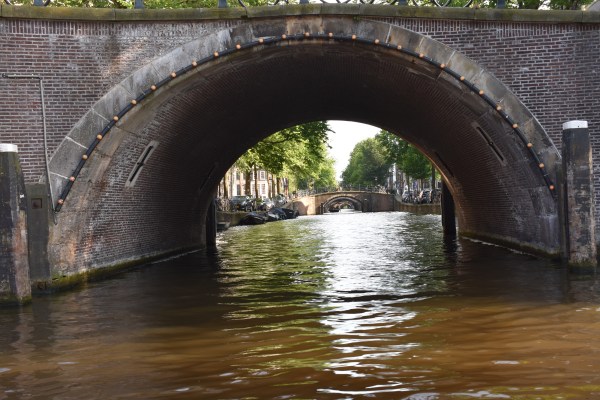
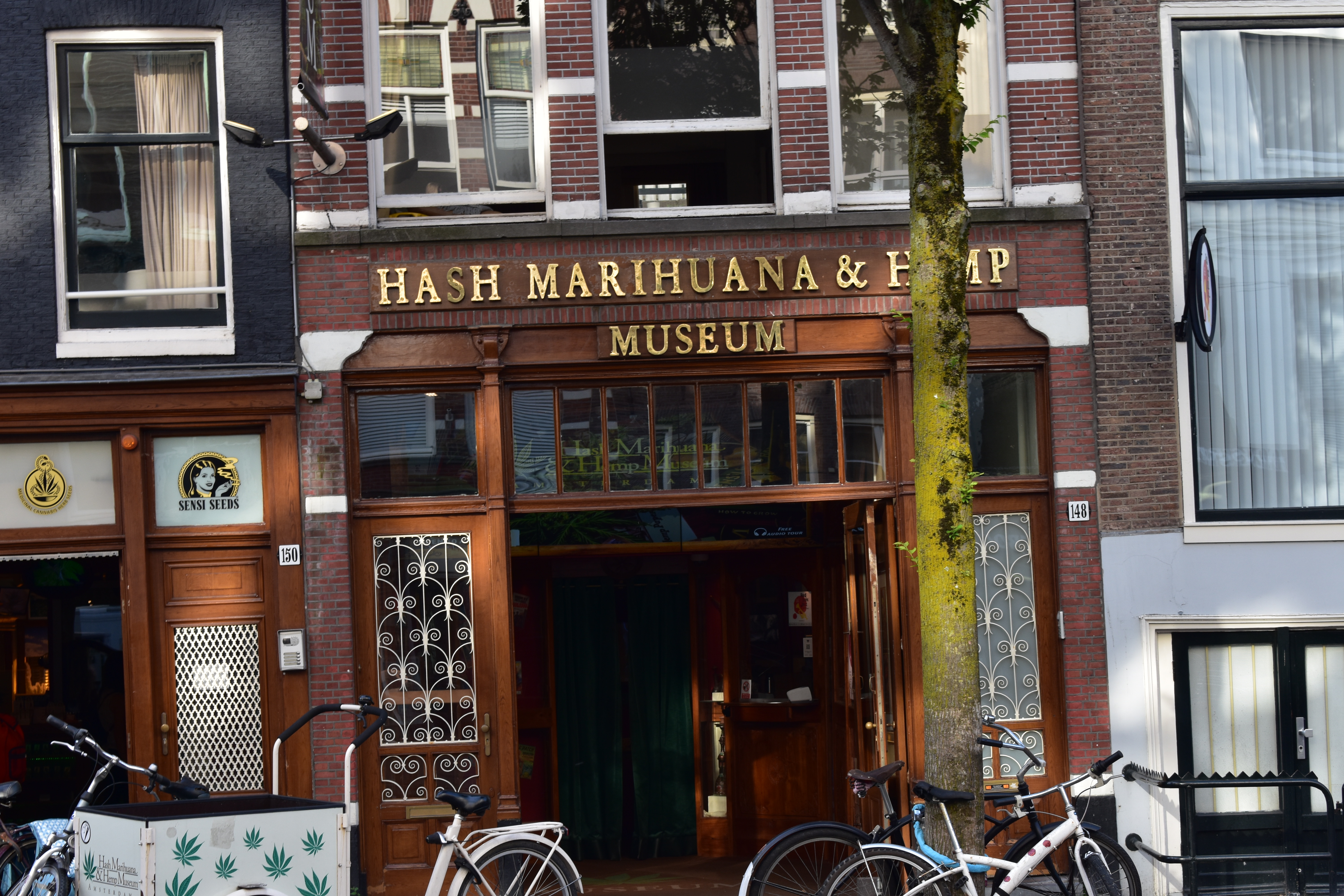
Regardless, it’s an interesting little tour where they point out historic things about the canals and the houses DSC_0109along them, most of which slipped my mind immediately. Then we docked and walked around to see other curious things about the city. The guide was quick to point out that you could buy pot in various forms at coffee shops. If the sign is in DSC_0113.JPGEnglish, there is no coffee pot, just pot. If you actually want coffee, learn Dutch. That may say something about the clientele.
He also walked us through the red-light district. It seemed to me both of these highlights were shown with something of a snicker, as in, “we know you want to see this and isn’t it interesting about this place and oh golly look there’s a girl wearing barely any clothes.” Okay, though I was also interested in maybe a couple of facts along the way, but he was too busy laughing up his sleeve to provide that.
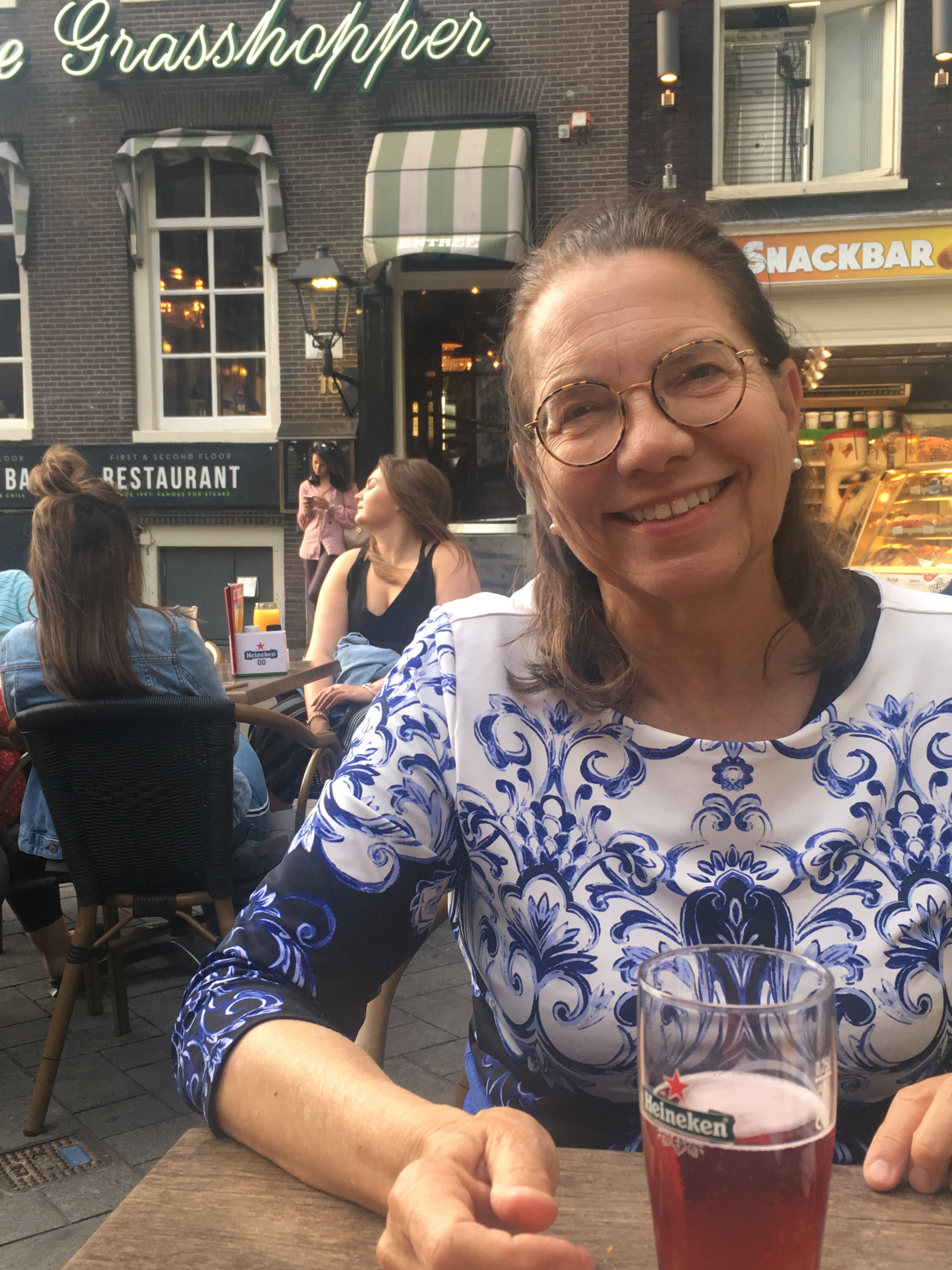
IMG_0911.JPGAfter that we were on our own for dinner and found a restaurant along a canal that served a really good meal, though somewhat inefficiently, unless you like your starter as your dessert. Then we walked around a bit before getting back on the coach (don’t call it a bus) and heading to the hotel.

By 7:30 the next morning we were on the way to Germany.

The tour director had cautioned us about pick pockets and thieves then told us to put our luggage outside our hotel room door forty-five minutes before we were scheduled to leave. Seemed odd. The airport admonitions about unattended luggage rang in my head.

Nonetheless, we always got our luggage when we got to the next stop.

We stopped in Cologne, Germany before lunch and had some time to look around. The poor, misguided Germans spell Cologne “Koln,” but there wasn’t time to explain it to all of them.

The big feature in Koln Cologne is a huge cathedral that survived several direct bombing hits during World War II. I chose to believe this says more about the accuracy and potency of 1940’s bombs than it does about divine intervention, but much of the surrounding neighborhoods were destroyed by those same bombs, so draw your own conclusions.

DSC_0114.JPGAlmost everything old, which is to say almost everything, is covered by scaffolding. Yet, for all of that, never once—not one single time—did we see anyone working on any of that scaffolding. Apparently, they put it up and figure that is good enough. Note to self: Invest in scaffold companies.

Since the surrounding neighborhoods were bombed, they are now modern and filled with restaurants and high-end stores in a pedestrian mall that goes on for blocks and blocks. Probably an improvement.

Back in the coach (don’t call it a bus) to wend our way to our destination for the evening. But, not before stopping along the Rhine to take a little boat tour. Lots of ancient castles that could have used some scaffolding.

The Rhine is German wine country, but the boat served beer. It was a pilsner. I had pretty much expected a heavy, dark, warm beer, but what do I know. Apparently nothing.
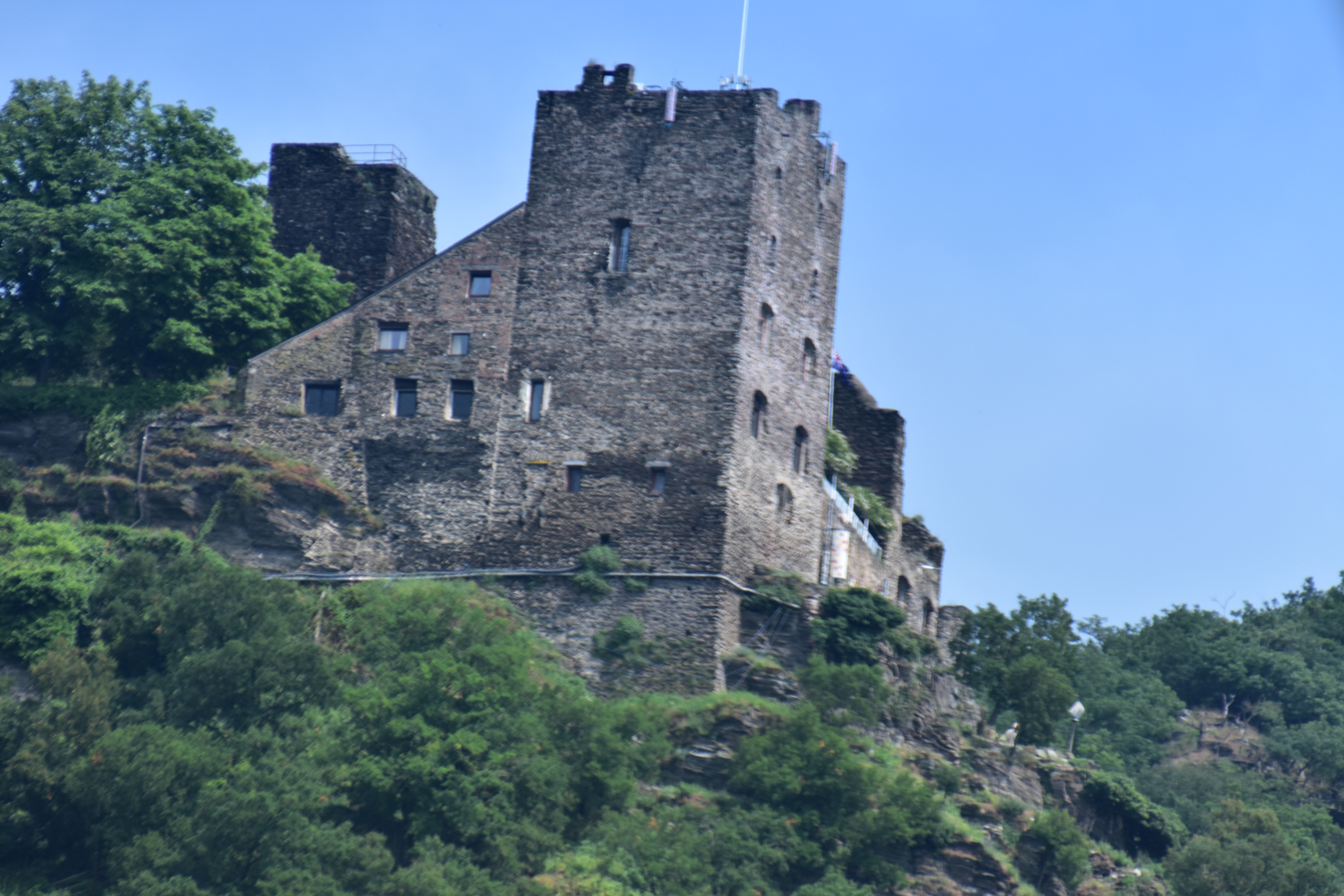

DSC_0125.JPG  IMG_0913

By now we were getting to know some of the people on the tour. There were at least four kids who had graduated from high school and were on the trip as gifts from (and with) their parents. Three Terrys, (two men, one woman); two Brians; the proper allotment of Ashleys; two women from South Africa who understandably said they are afraid to visit the U.S.; two couples on honeymoons; various Canadians; one woman who, like us, is from San Diego; and a couple from Tasmania who took it upon themselves to be the life of the party, with or without a party.

We stopped that night in Neustadt, Germany and, if the first hotel was cozy, this one was petite. I’m not a travel expert, and I said I wouldn’t give advice, but if you have the chance to go to Neustadt, don’t.

As it turns out there was a lot to do the next day on the Fast and Furious Cuckoo.JPGTour. We stopped for lunch at a place that was also a cuckoo clock store. Very elaborate cuckoo clocks. So-so lunch. And later a stop at Rhein Falls. Not a huge waterfall, but a nice scenic spot.

And then back in the coach (don’t call it a bus) to get to Switzerland. If I was supposed to feel Rhein Fallsguilty about sleeping because I might miss something, I learnt that the highways are lined with trees so there is nothing to see except asphalt and white lines. There are no Botts dots in Europe, by the way. The highlight of the highway in Germany are the signs that say “Ausfahrt.” It’s not a pay toilet protest thing – it means “exit.” Interesting for an exit or two, but after that, only if you’re twelve.

We finally arrive at a hotel in Giswill, Switzerland. The tour director, again apologizing because the temperatures were in the seventies, advised that the hotel did not have air conditioning. “Do as we do in Germany, open the windows.” Hey everybody, the Germans invented open windows.

Mark this hotel down as quaint. It appears to get most, if not all, of its business from tour buses.

The first taste of Lucerne, other than the endless blocks of Swiss watch stores, was literally a dinner at a cabaret that included a very loud and noisy music show. I learned I’m not fond of fondue, and that the accordion should be reserved for prisoner of war camps, along with its dumb little cousin, the concertina. Everyone was much too jolly and ear-splittingly loud. I’m not making value judgments, just. . .oh come on, who am I kidding, I’m making value judgments. It sucked.

Switzerland is beautiful. If it were always 78 (25 C) we would have bought property, though the Centigrade thing would be a deal breaker. It’s one of nine countries in the EU that doesn’t use the Euro, though every shop and restaurant accept them. They just give change in Swiss francs which turn into worthless souvenirs because they aren’t welcome anywhere else.

IMG_0929.JPGWe took a boat across Lake Lucerne to get to the base of Mt. Pilatus, which, despite what you might assume, is not the place where Pilates was invented. (One day, take the time to read the Wikipedia entry on Pilates. It essentially says Pilates doesn’t live up to any of its claims for improving health and fitness and is only slightly better than doing nothing.)

Mt. Pilatus, on the other hand, lays claim to having the steepest cog wheel railway in the world. The distinction is important apparently. Stoos has a steeper funicular. Some place in Katoomba Australia has a steep railway, but no place has a steeper cog wheel railway. So there. We took a gondola down, Gondola.JPGwhich had nothing to distinguish itself, other than its somewhat perilous route. At the top of the mountain, nothing but gorgeous green Switzerland.

At 7:15 the next morning we were off to Paris, which, I learnt, is in France.

Only one thing stands out from the coach (don’t call it a bus) ride to Paris. That’s the vending machine at the rest stop that sold “Cannabis Iced Tea.” It was €2.50. Coca Cola was €3.00. I didn’t have correct change, because the machine didn’t accept Swiss francs. 

Something else that’s handy to know. In most buildings, the first floor is the ground floor and the second floor is the first floor. And so on, making the thirteenth floor the twelfth floor unless they don’t count the thirteenth floor in which case the fourteenth floor is the twelfth floor, or the twelfth floor is the fourteenth, depending upon which way you’re counting.

It was Paris where the Blink and You Miss It tour really earned its name. We checked in to the hotel and immediately left for a boat trip on the Seine. Along the way the tour director pointed out the Eiffel Tower on the right and, a little farther on, the Arc de Triomphe on the left. Moving right along. The boat tour wasn’t much better, cruising past the Musee Orsay, the Louvre, and Notre Dame. We of course could only see the upper two-thirds of the buildings because we were beneath them on the water.Eiffel.JPG
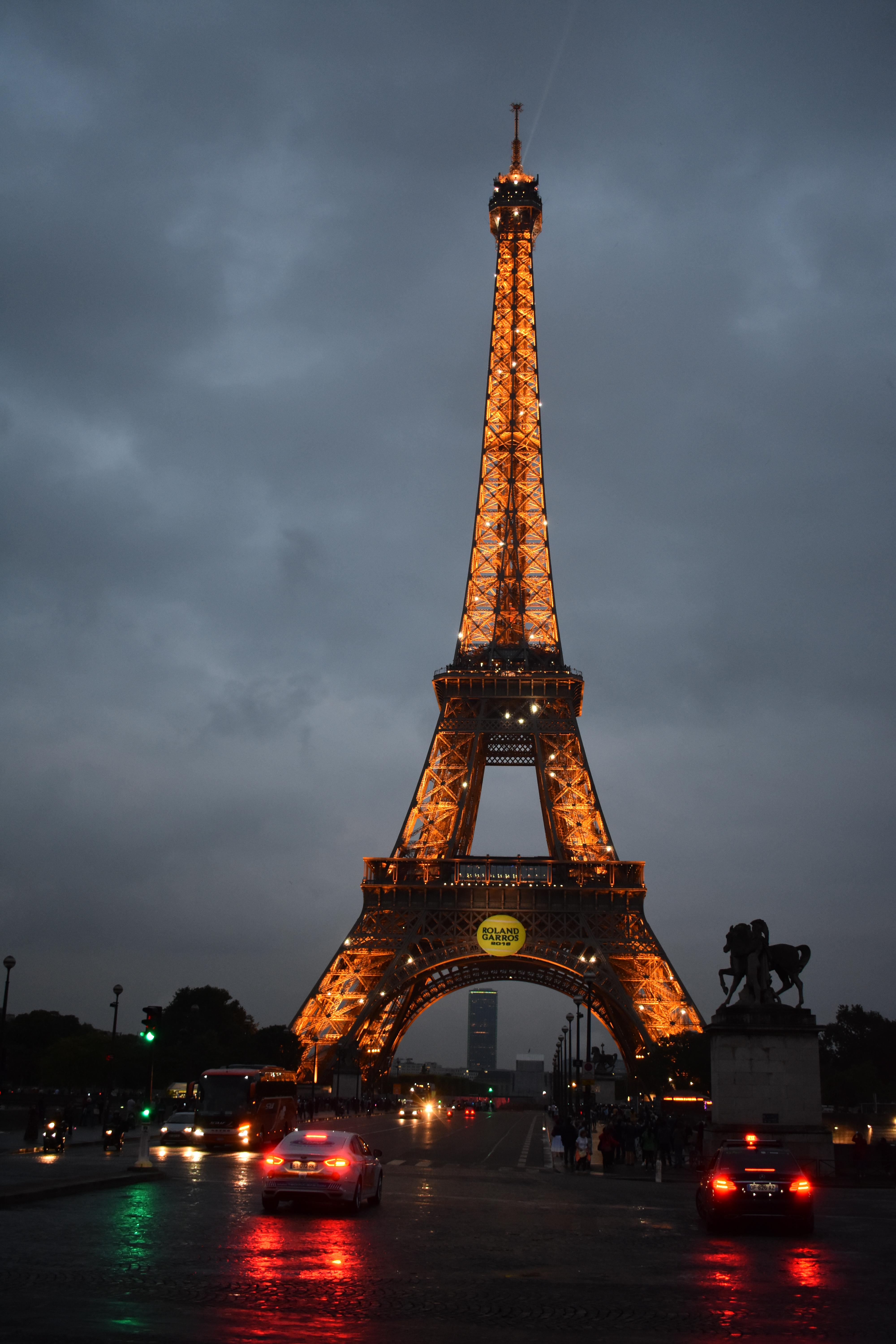
The only saving grace was that on the way back to the hotel, we stopped in front of the lighted Eiffel Tower long enough to take some pictures.

The next morning, we took a driving tour of the city in the coach (don’t call it a bus). It was just as quick. All I remember was a restaurant that advertised “Original French Tacos.” Shameful.

That evening, we ditched the group and found a small French country restaurant for a very nice, relaxing dinner.

The next morning, we headed back to London and the end of the tour.

But not the end of our trip. It is, by the way, a trip, because when you’re retired you don’t take vacations. Every day is a vacation. So, if you go anywhere, you go on a trip. More about the rest of the trip, in part two.

Over/Under

Here’s something curious.

On Tuesday, the President of the United States took credit for there not having been any commercial aircraft deaths in his first year in office, give or take 18 days. Specifically he said – well, no he didn’t say, he tweeted, so let me back up – Specifically he thumbed “Since taking office I have been very strict on Commercial Aviation. Good news – it was just reported that there were Zero deaths in 2017, the best and safest year on record!”

That’s interesting on several fronts. One is that “commercial aviation” is not a proper noun. Nor is “zero,” except in the case of Mostel.

Another way this is interesting is that the President of the United States, no president, has anything to do with airline safety. No pilots check in with him to get their flight plans. No airline gets its schedules from the president. Although apparently most people in the administration have to pledge their loyalty and fealty to the president, airline pilots do not, and therefore they and their auto-pilots are not beholden to his demands that they exercise caution while flying.

A third way that the president-who-shall-remain-nameless taking credit for airline safety is interesting, is that there has not been an accidental death on a domestic commercial airline in the United States since February 2009. That means that, with the exception of the first 22 days of the Obama administration, there has not been an accidental death on a U.S. airline on his watch. Not that it’s relevant to the actions of either one of them.

Give him his due. The airlines operating during the first eleven months and sixteen days during the administration of the president-who-shall-remain-nameless have a better airline safety record than the administration of the foreign-born, non-Christian president who preceded him and who he detests and with whom he is, apparently, locked in fierce competition.

But wait.

There’s another, even more interesting way that this claim by the president-who-shall-remain-nameless is worth noting.

That is that 2017 set another record. It not only had the same number of commercial airline accidental deaths of every year since 2009, but it also had the most coal mining deaths. There were a record low of eight coal mining deaths in 2016 when the foreign-born, non-Christian president was in office. But, 15 coal miners died in the first year of the administration of the president-who-shall-remain-nameless.

As with airline safety, this is not to the credit or blame of any president, except that the president-who-shall-remain-nameless has championed the coal industry and promised to put coal miners back to work.

In March this year, for instance, surrounded by unemployed, but alive, coal miners at the Environmental Protection Agency, the president-who-shall-remain-nameless signed an executive order vowing to roll back climate change policies of the foreign-born, non-Christian president, including the Clean Power Plan limiting carbon pollution from coal-fired power plants. “C’mon fellas, you know what this says?” the president-who-shall-remain-nameless asked. “You’re going back to work!”

He did not mention that, although they haven’t yet gone back to work, those who are working in coal mines have died at a rate 15 times higher than people on commercial airlines.

The conclusion seems obvious. It is safer to be in an airplane with which the president-who-shall-remain-nameless has no control than in a coal mine that he has promised to save.

A Christmas Story

My 92 year-old mother-in-law has discovered the Hallmark Channel. And sometime in mid-August, the Hallmark Channel discovered Christmas. Those two things only relate to me because my mother-in-law lives with us and for twelve hours a day has complete control of the television in the family room.

One of the disadvantages of retirement is that I am sometimes at home for long stretches of time. And, while I avoid the family room as much as I can, I do pass through now and then on my way to the scotch.

There’s a certain, shall we say, sameness to the Christmas movies on the Hallmark Channel. All the women smile constantly. No matter what problems and travails beset them, they smile through every line of dialogue. They are all also searching for the perfect man, though they don’t know they are. All the men are congenial, incredibly sensitive and understanding and, otherwise, completely devoid of personality and genitals.

Tonight I walked in on one about a law student whose true passion is her small town’s annual ice sculpting contest. Because, who doesn’t love standing in sub-zero temperatures for hours on end with a chain saw and chisel? She happens to meet a guy who, it just so happens, also loves ice sculpting. What are the odds? They decide to team up and lo and behold win the contest. No one could ever have predicted that. As nearly as I could tell they sculpted a house with an elk on the roof and a dolphin in the front yard. And that tells you a lot about the other sculptures, none of which are shown. But wait, there’s more. They fall in love and she turns her back on the law to become a full-time ice sculpture contestant, which must be able to occupy her for a solid three weeks a year. And the prize money? I don’t know, probably in the high double figures. Her family, who put her through law school at great personal sacrifice, is, of course, overjoyed that she’s found true happiness. Who wouldn’t be? She’s our little girl after all.

That happy story was followed immediately by a woman whose full-time job – eight hours a day, five days a week, twelve months a year — is to select the official Christmas tree for Chicago. She searches high and low for a tree, presumably at pine forests. She has an office full of assistants. Can you say fiscal responsibility? But that’s not the point. She is known as Miss Christmas and her name is, wait for it, Holly.

Ten days before the tree is supposed to be delivered the truck driver manages to somehow scrape half the limbs off the Official Tree. But the next day Holly finds another tree, which of course begs the question if you can find a “perfect” tree in a day what do you do the other eleven months and twenty eight days of the year? But, hey, it’s a movie.

I suppose there are a couple of twists and turns along the way to flesh out the story for an hour and a half or however too long these things run, but I can’t fill in that blank for you. About the time a bunch of people sat down for dinner and smiled and toasted and smiled some more, I lapsed into diabetic coma.

And this goes on hour after hour, day after day, for months. If there wasn’t already a war on Christmas, I’d enlist in one.

Bah humbug.